
Vegetarian Japanese Curry
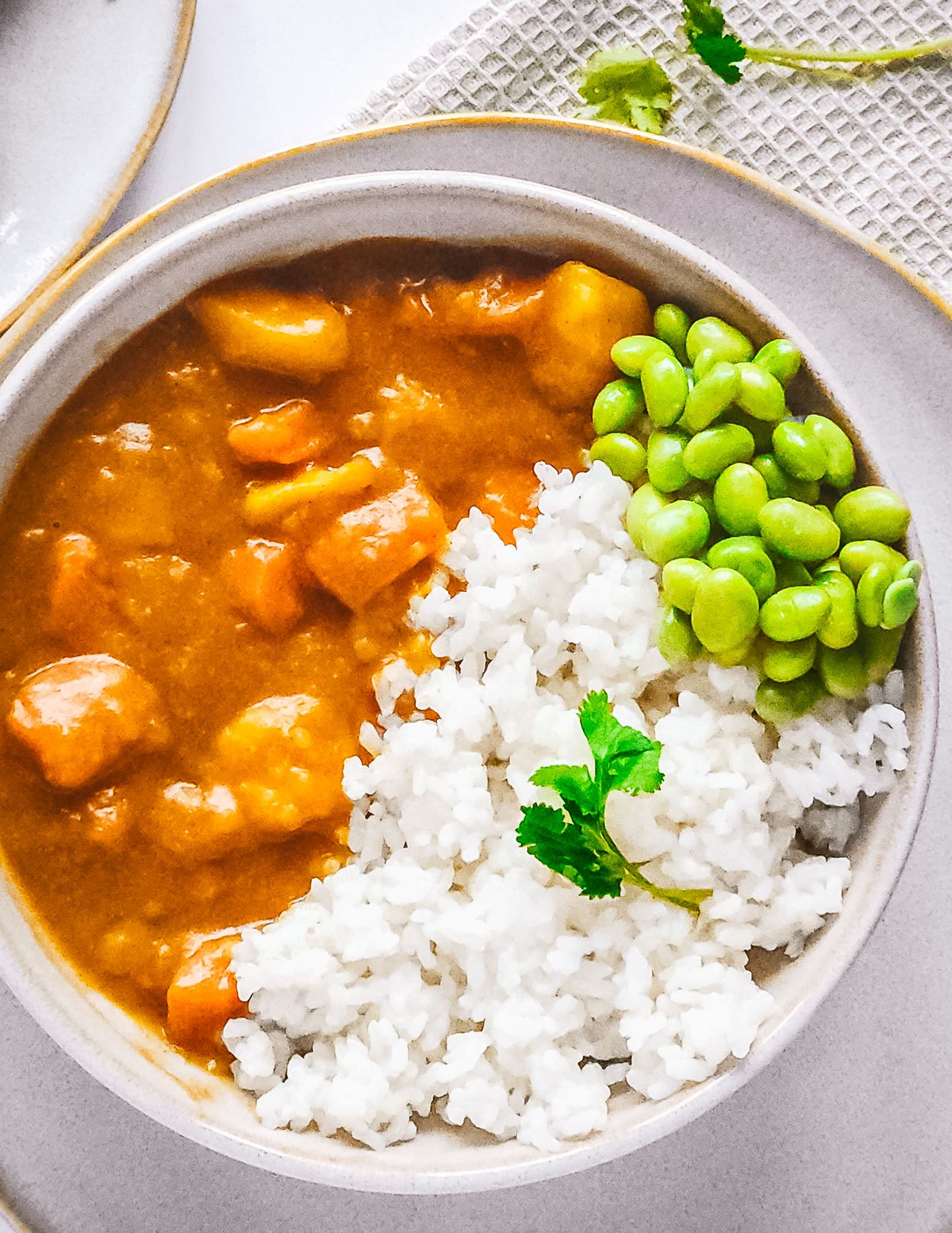
This is one of the first Japanese curries I ever tried in a restaurant — and one I felt compelled to recreate at home. I’ve been making versions of it ever since. It’s simple, deeply comforting, and quietly satisfying — the kind of curry that feels like a warm hug in a bowl.
This dish is built around familiar ingredients, coming together in a way that feels steady and grounding. It’s the sort of meal I return to when I want something nourishing, cosy, and reliable.
Japanese curry relies on simplicity. Sweet, earthy carrots. Soft, velvety potato chunks. Gentle aromatics from onion, garlic, and ginger. Everything is held together by the curry cubes, which bring warmth, spice, and savoury depth.
As the vegetables cook, they absorb the seasoning and release their natural sweetness. The curry thickens into a glossy gravy that clings to rice or noodles, rounding everything into a hearty, comforting bowl. It’s proof that uncomplicated ingredients can still feel rich and complete.
I start by prepping all the vegetables first — chopping the carrots and potatoes into medium-sized chunks and finely dicing the onion. The garlic and ginger are grated or crushed, whichever feels easiest.
One thing I always do is grate the curry cubes with a fine grater and set them aside. It’s not a common step, but it makes a real difference later, helping the cubes melt smoothly into the sauce without clumping.
For this recipe, I usually reach for the Instant Pot. I set it to sauté on low and heat the oil gently before adding the onion, garlic, and ginger. They soften slowly, turning lightly golden and fragrant.
Once the aromatics are ready, I add the potatoes and carrots, season lightly with salt and sugar, then pour in the water — just enough to submerge the vegetables. The curry pressure-cooks briefly, just until the vegetables are tender.
After a quick pressure release, I return the pot to sauté mode and gradually fold in the grated curry cubes. The sauce thickens slowly into a smooth, glossy gravy. At this stage, I often add a chopped green chilli for extra depth, then let everything simmer gently for a few minutes. If I’m using tofu, it goes in here too.
As the curry comes together, the kitchen fills with a warm, spiced aroma. The sauce turns glossy, coating the vegetables, while the chilli adds a gentle heat that deepens the flavour rather than overpowering it.
Each spoonful brings tender carrots, creamy potatoes, and that unmistakable Japanese curry warmth. It’s rich without being heavy — comforting, familiar, and deeply satisfying. Served with hot rice, it’s one of those meals that settles you completely.
Japanese Vegetable Curry (Instant Pot or Stovetop)
Prep Time: 10 mins
Cook Time:
Instant Pot: 10–12 minutes
Stovetop: 25–30 minutes
Yields: 2 - 3 servings
Ingredients
Curry Base vegetables
2 medium carrots, cut into chunks
1 large potato (or 2 medium), cut into chunks
1 medium onion, finely diced
Aromatics
2 tbsp garlic paste (or 3 cloves garlic, crushed)
2 tbsp ginger paste (or 1-inch ginger, grated)
Curry & Seasoning
4 Japanese curry cubes (I used S&B Golden Curry Extra Hot)
240 ml water
1 tbsp neutral cooking oil
¼ tsp salt
¼ tsp sugar
Optional Add-ins
115 g tofu (fried preferred; fresh tofu can be pan-fried)
Green chilli, finely sliced (optional)
To Serve
Steamed rice or noodles
Instructions
Prepare Ingredients
Chop carrots and potatoes into bite-sized chunks.
Finely dice the onion.
Crush or grate the garlic and ginger.
Grate the curry cubes and set aside.
Method 1: Instant Pot
Sauté Aromatics
Set the Instant Pot to Sauté (Low) and heat the oil.
Add onion, garlic, and ginger.
Cook for 3–4 minutes until soft and fragrant.
Pressure Cook
Add carrots, potatoes, salt, sugar, and water.
Stir, close the lid, and set to Low Pressure – 3 minutes.
Quick release pressure once finished.
Thicken the Curry
Switch back to Sauté (Low).
Gradually stir in grated curry cubes until dissolved.
Add tofu (if using).
Simmer 5–6 minutes, stirring occasionally.
Adjust consistency with water if needed.
Method 2: Stovetop
Sauté Aromatics
Heat oil in a saucepan over low–medium heat.
Add onion, garlic, and ginger.
Cook 4–5 minutes until soft and fragrant.
Simmer Vegetables
Add carrots, potatoes, salt, sugar, and water.
Simmer covered for 15–20 minutes until tender.
Thicken the Curry
Lower the heat.
Gradually stir in grated curry cubes.
Add tofu (if using).
Simmer uncovered 5–10 minutes until glossy.
Adjust consistency as needed.
Serving suggestions
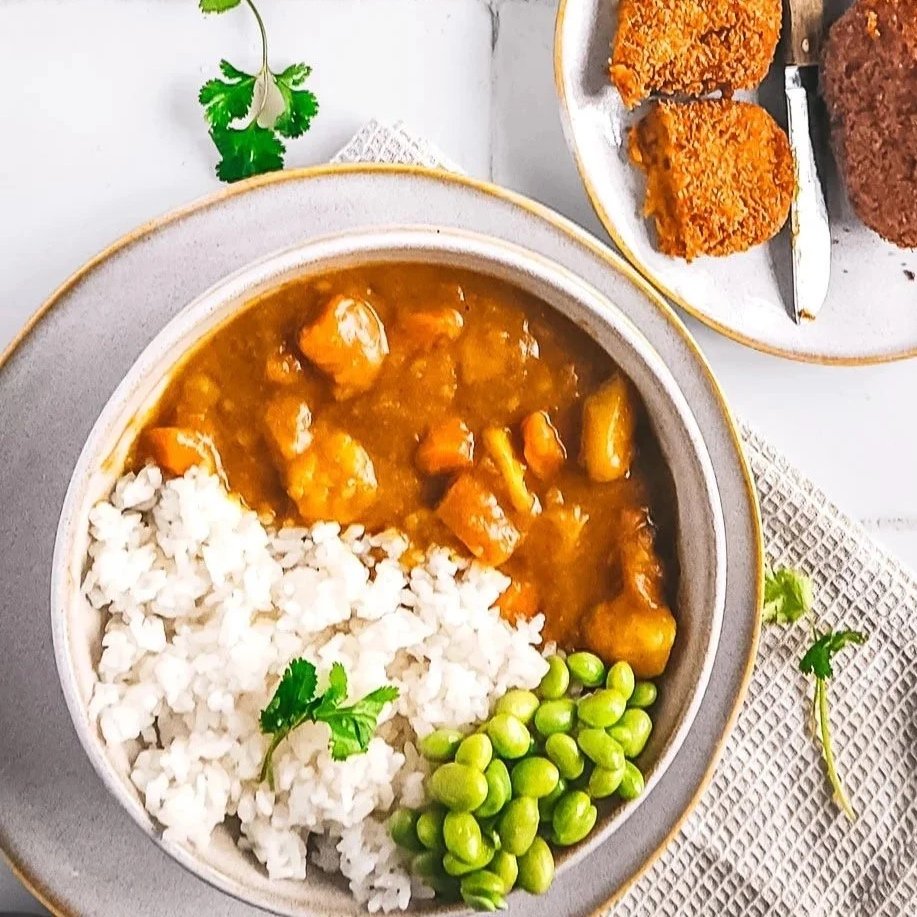
This curry works beautifully for both lunch and dinner. I usually serve it with white sushi rice or jasmine rice, but it’s equally good with noodles — the sauce clings beautifully.
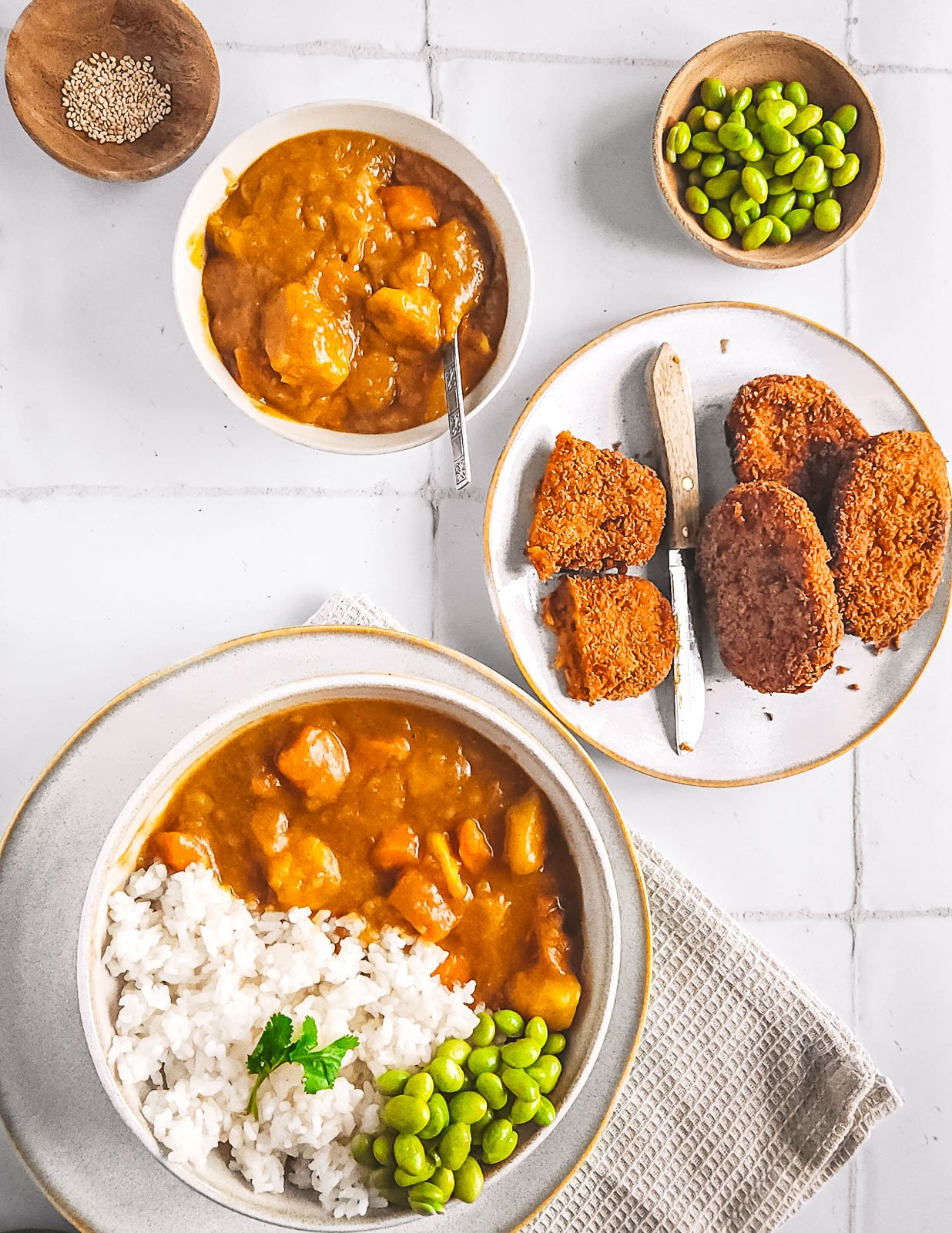
For contrast, I often add something crisp or fresh on the side: edamame beans, dumplings, spring rolls, or a simple salad. It also pairs well with heartier sides like pumpkin croquettes or fritters, making it ideal for a relaxed get-together.
If you’re planning a spread, you might enjoy serving it alongside:
Storage and Practical notes
This curry stores well in the fridge for up to 2 days and freezes nicely. If frozen, reheat gently in a pan for the best texture — it stays closer to freshly made.
A Note on Grating Curry Cubes
Grating the curry cubes helps them dissolve evenly, preventing clumps and creating a smoother, glossier sauce.
A Note on Heat Level
Heat is subjective. Extra hot curry cubes with optional green chilli create warmth and depth rather than sharp spice, but some may still find it quite bold. If you prefer a gentler curry, you can choose milder Japanese curry cubes instead, reduce the quantity slightly, or skip the chilli altogether. Adjusting the heat lets the sweetness of the vegetables shine through while keeping the curry comforting and balanced.
This is one of those recipes I’ve been making ever since my love for Japanese food first took hold. It’s familiar, grounding, and deeply comforting — the kind of meal that never feels like effort, yet always feels generous.
My food. My canvas. My chronicles.
— Mina
