
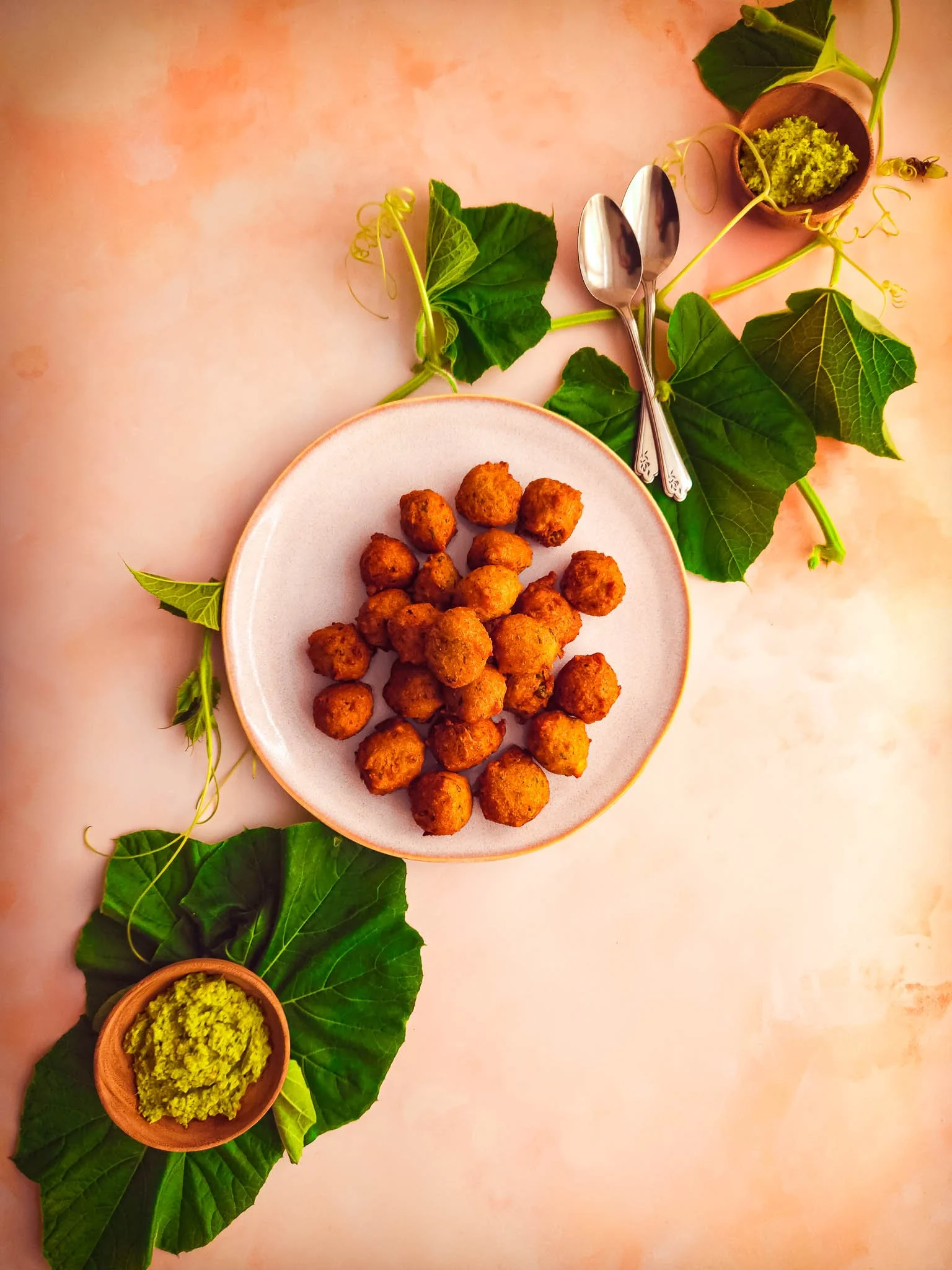
There’s something about these fritters that feels like home — even though every family makes their own version. I grew up seeing them as one of those “use what you have” snacks, shaped by whatever vegetables happened to be around. Over time, I stopped keeping them for special occasions and started treating them like a quiet staple.
They’re simple, earthy, and far more satisfying than they look.
And in my family, this recipe is well-loved. We call them bhajiya, though in other parts of India they’d be known as pakoda. Either way, the spirit is the same: a warm, comforting snack that somehow disappears faster than you expect.
Bottle gourd is one of those vegetables that quietly blends into a dish — soft, subtle, and good at carrying flavour. When it’s paired with a mix of lentils, onions, ginger, and warm spices, these pakoda turn into something unexpectedly comforting.
They’re not crunchy. They’re gently crisp on the outside, tender in the middle, full of texture from the blended dals and softened vegetables.
What I love most is how forgiving the recipe is. Once the batter ferments overnight, everything falls into place. The vegetables fold in, the aromatics melt into the mixture, and the fritters puff just enough as they hit the oil. It’s the kind of snack that seems to vanish — one batch never feels like enough.
I start by soaking the lentils, rice, and fenugreek seeds — a mix that gives the pakoda structure without heaviness. After a long soak and rinse, the whole thing blends into a slightly grainy batter. It rests overnight, and this step really matters. Just like idli or dosa batter, fermentation changes everything: the flavour deepens, and the fritters fry up lighter and softer.
The next day, the vegetable base comes together: dudhi (bottle gourd), carrots, cabbage, peas, and sweetcorn. The vegetables are lightly sautéed just enough to remove excess moisture and soften them slightly, then set aside to cool.
At the same time, the aromatics — garlic, ginger, red onions, and chillies — stay raw. They’re added directly to the cooled vegetable mixture when folding everything into the fermented batter. This method keeps the flavours fresh and bright, letting them fully infuse the mixture as the pakoda fry.
Once combined with the fermented batter, semolina, gram flour, spices, dried methi, and lime juice are folded in. The mixture should feel thick, spoonable, and generously packed with vegetables. ENO goes in at the very end, just before frying, giving the batter that gentle lift.

When they hit the oil, the fritters turn golden-soft — crisp at the edges, tender in the middle, full of warmth and texture. They’re best eaten hot, though I never see anyone wait.
These pakoda have a quiet complexity. The lentils give body, the vegetables soften into the mixture, and the spices settle into the background. The outside is lightly crisp, the inside almost fluffy. You get warmth, softness, subtle spice — and a kind of comfort that feels both familiar and grounding.
They’re the type of snack people reach for without thinking, one after another.
Dudhi Pakoda (Bottle Gourd Fritters)
Soak time: 6–8 hours (lentils & rice)
Fermentation time: 12 hours minimum
Prep time (active): 25–30 minutes
Cook/fry time (per batch): 15–20 minutes
Total active time: 40–50 minutes
Ingredients
Lentil Batter Base
Chana dal – 150 g
Black-eyed beans – 50 g
Moong dal (yellow, no skin) – 50 g
Masoor dal (red lentils) – 50 g
Toor dal – 50 g
Urid dal – 25 g
Basmati rice – 25 g
Fenugreek seeds – ½ tbsp
Water – 325 ml
Vegetables
Dudhi (bottle gourd) – 300 g, chopped
Carrots – 175 g, chopped
Cabbage – 225 g, chopped
Frozen peas – 50 g
Frozen sweetcorn – 50 g
Aromatics
Red onions – 2–3 medium (added directly to batter)
Garlic – 5–6 cloves (~35 g)
Ginger – 15 g
Chillies – 3–4, chopped
Flours & Spices
Semolina – 87 g
Gram flour – 87 g
Jeera dhanna (ground cumin + coriander) – 2 tbsp
Crushed cumin – ½ tbsp
Whole ajwain – 2 tsp
Black pepper – 1 tbsp
Hing – ½ tbsp (asafoetida)
Dried methi leaves – 1.5 tbsp
Salt – 3 tsp
Sugar – 1 tbsp
Lime juice – 30 ml
Raising Agent
ENO fruit salt – 1/8 tsp per small batch
Oil
For deep or shallow frying
Instructions
Make the Batter Base
Soak all the lentils, rice, and fenugreek seeds for 6–8 hours.
Rinse thoroughly and blend to a slightly grainy paste.
Add the 325 ml water.
Leave to ferment overnight or at least 12 hours.
Prepare the Vegetables & Aromatics
Chop the bottle gourd, carrots, and cabbage.
In 2 tablespoons of oil, lightly sauté the chopped vegetables for 5–6 minutes, just until slightly softened.
Set aside to cool.
The aromatics — garlic, ginger, red onions, and chillies — are added raw (paste or finely chopped) the next day, after the batter has fermented.
Combine Everything
In a large bowl, mix semolina, gram flour, spices, dried methi, salt, and sugar.
Add the fermented lentil batter.
Fold in the sautéed vegetables.
Add lime juice and adjust seasoning as needed.
Add ENO last, folding gently just before frying.
Fry the Pakoda
Heat oil in a deep pan.
Drop small spoonfuls (around 15 g each) into the oil.
Fry on medium heat until golden.
Drain on paper towels.
Serve immediately.
Serving suggestions
They’re best eaten fresh. Once fried, the pakoda will keep for a few hours at room temperature and in the fridge for upto 2 days. Reheat them in a hot oven or air fryer to bring back some of the light crispness.
You can also fry the pakoda and freeze them — they reheat well in an air fryer or oven.
Storage and Practical notes
They’re best eaten fresh. Once fried, the pakoda will keep for a few hours at room temperature and in the fridge for upto 2 days. Reheat them in a hot oven or air fryer to bring back some of the light crispness.
You can also fry the pakoda and freeze them — they reheat well in an air fryer or oven.
Note on Bottle Gourd
Dudhi (bottle gourd) is often overlooked, but it brings a quiet softness to these pakoda. It melts into the batter and gives it lightness, helping the fritters stay tender instead of dense. It also absorbs the spices beautifully, making the overall flavour warmer and more rounded.
Note on Fermentation
This step isn’t optional. The long soak and overnight fermentation work exactly like they do in dosa or idli batter — they change the way the fritters fry. Without fermentation, the pakoda sit heavy. With it, they’re lighter, softer, and taste fully developed.
There’s something grounding about this recipe — familiar flavours, soft textures, and the kind of warmth that feels woven into everyday cooking. Dudhi often gets overlooked, but here it shines quietly, folded into a batter that feels both nostalgic and dependable.
My food. My canvas. My chronicles.
— Mina
